Private dining at Dusk & Chance is for gatherings that want dinner to feel considered, intimate and distinctly after dark—an Australian restaurant occasion with its own unhurried character.
Begin around the table, then let the night find its pace. The card lounge and dedicated card room can contribute atmosphere where appropriate; poker remains an in-person experience at the physical venue.
Bring the purpose of the night first. The details can follow from there.
01 / DINNER
For a dinner worth lingering over
For birthdays, milestones or a long-overdue dinner, the appeal can be simple: an intimate table, room for conversation and a late-night restaurant mood that does not rush the gathering toward a finish. Start with the people you want around the table and the feeling you hope they take home. The occasion can stay personal without needing to fit a named format.
02 / CONVERSATION
For a group with something to talk about
Work and creative gatherings sometimes need a change from the usual private-room script. Shared food, a darker room and a more deliberate pace can give a group space to speak properly, catch up or mark a turning point together. Describe the tone you are after rather than trying to force the night into a formal category; that is often the more useful place to begin.
03 / AFTER DINNER
For an after-dinner change of scene
Friends drawn to the venue’s card-lounge energy can keep dinner as the anchor, then ask what physical-venue card-room possibilities may suit the occasion. The card lounge, dedicated card room and poker tables are part of Dusk & Chance’s in-person world, not an assumed inclusion. Raising the idea early leaves room for a considered conversation about the shape of the night.
RESTAURANT FIRST / PHYSICAL VENUE
The venue in sequence
Dinner sets the tempo.
Food first. The rest follows the room.
A private dining occasion can begin with the restaurant’s food, light and conversation, then continue at the pace that feels right for the group. The table gives everyone a common starting point: a place to arrive, settle in and let the evening open without turning it into a timetable. It is a dinner-led way of gathering, with the after-dark setting doing quiet work in the background.
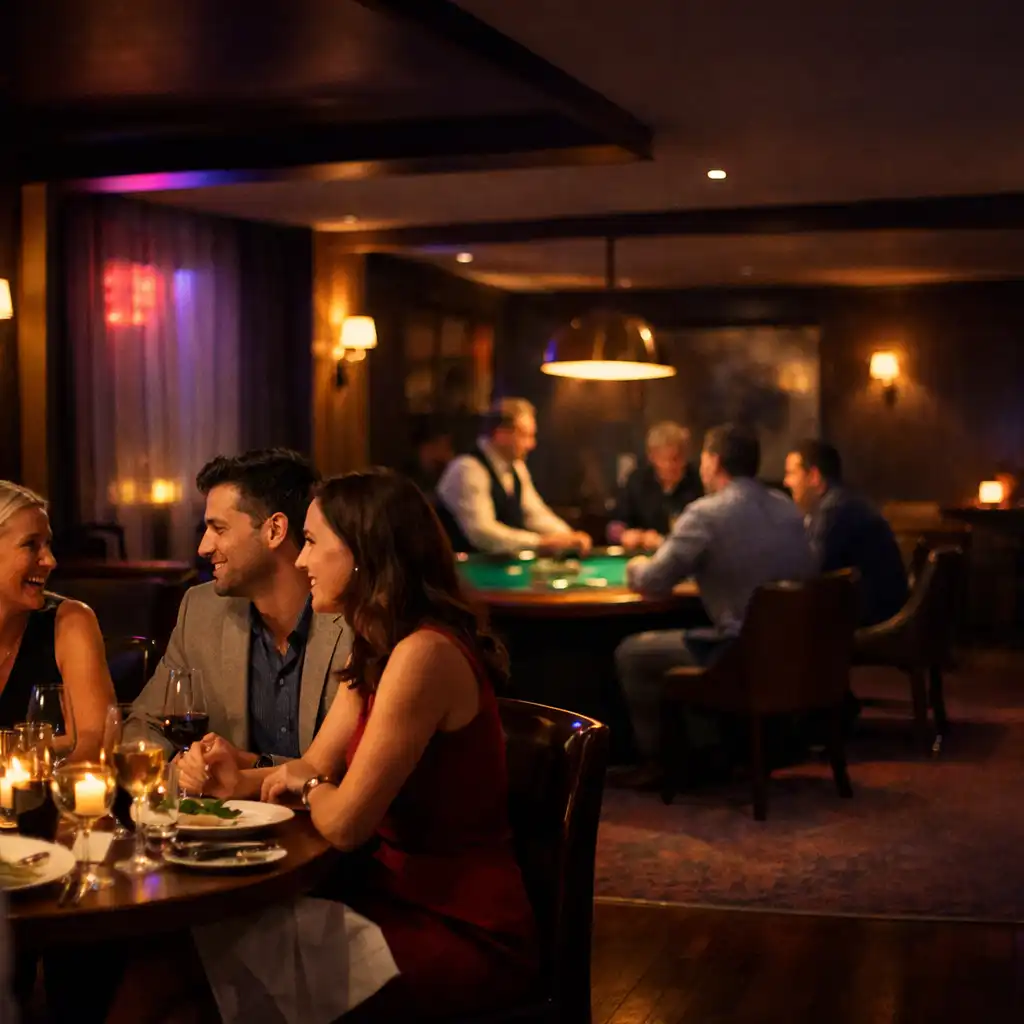
CARD LOUNGE The lounge adds another register to the night: softer light, a change of setting and somewhere for conversation to keep moving after the table. It is part of the atmosphere rather than a promise of privacy or a prescribed next step. You can read the card room and etiquette notes before deciding whether that setting feels relevant.
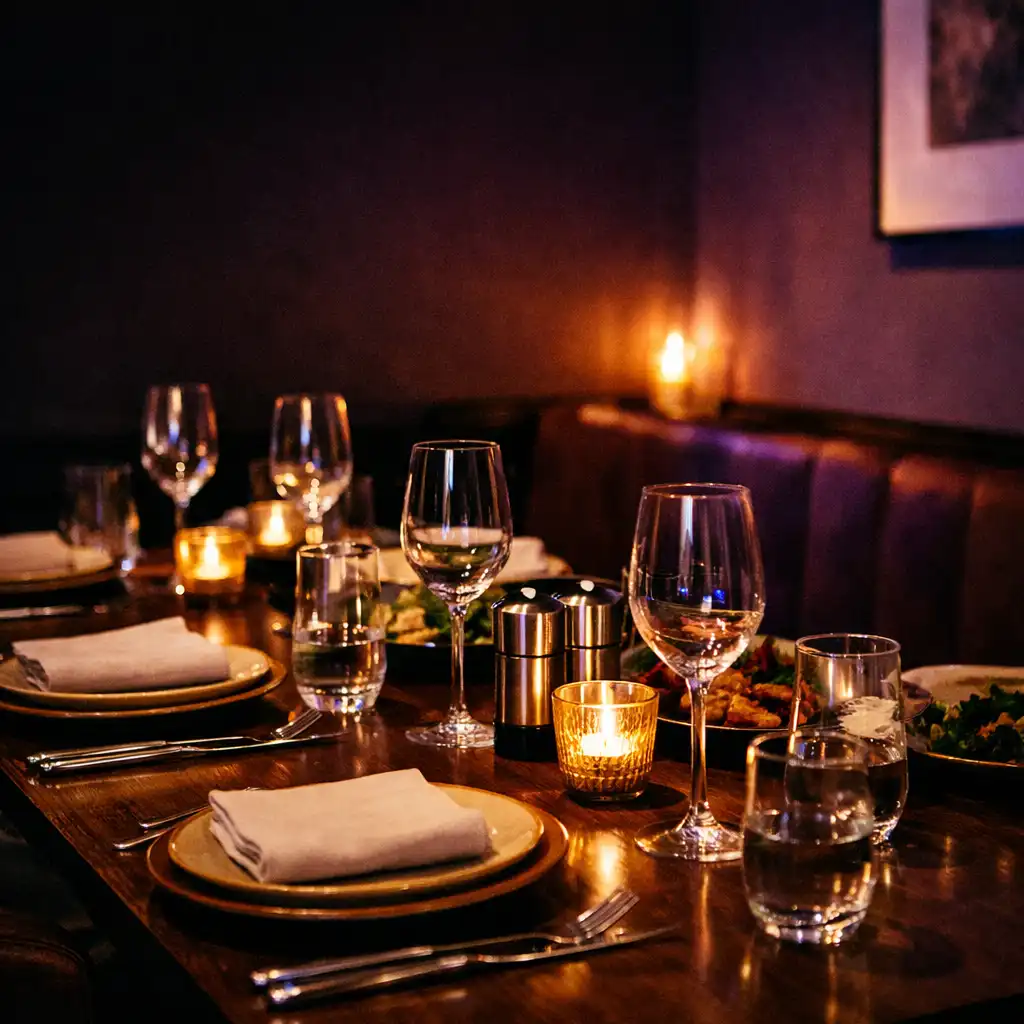
A shared table with the card-lounge atmosphere held in the background.
Enquiry framework
A useful way to begin.
A few clear signals help turn an idea into a productive conversation.
01
Set the tone
Start with the purpose of the gathering: who is coming, what you want the night to feel like and whether dinner is the full focus. A little host-minded context is more helpful than a long brief. Quiet and intimate, sociable and shared, or a little more late-night are all useful ways to describe the energy without locking the occasion into a script.
02
Give the evening some shape
Share a preferred date, broad group details and any early dining thoughts so the venue can understand what to explore with you. These are conversation starters, not a confirmation of availability or a fixed plan. The more clearly the occasion is described, the easier it is to keep the discussion focused on the right kind of evening.
03
Flag the room you are drawn to
If the card lounge, card room, poker tables or hosted in-person sessions are part of the interest, raise it early. These are physical-venue elements, and the context matters. Naming the part of Dusk & Chance that has caught your attention helps keep the conversation practical, considered and connected to the restaurant atmosphere.
The conversation can then focus on a considered night rather than a generic checklist, with the restaurant mood leading every decision.
Useful context
What to bring to the conversation.
These are planning prompts, not requirements. They simply give an early enquiry a clearer starting point.
01
The mood
Mention the occasion and the kind of energy you want: quiet and intimate, sociable and shared, or a little more late-night. These are tone cues rather than event categories. They help describe how you want guests to feel when they arrive and how much structure the night should carry.
02
The gathering
Give a broad sense of the group so the conversation can begin at the right level of detail. Who is gathering, what brings them together and whether the evening is about catching up, celebrating or making room for a new idea can all help frame the occasion without reducing it to a headcount exercise.
03
The table
Share any dietary considerations and the broad way you imagine dinner unfolding, without assuming a preset menu format. It is useful to know what matters at the table, whether that is time to talk, a feeling of generosity or simply a dinner that lets everyone settle in together.
04
The after-dinner direction
If the card lounge, card room, offline poker or a hosted in-person session is part of the interest, say so plainly. Dusk & Chance’s card spaces, poker tables and recurring offline poker evenings belong to the physical venue. Raising the thought early helps the venue understand the intended night while keeping the plan anchored to the room you will share in person.
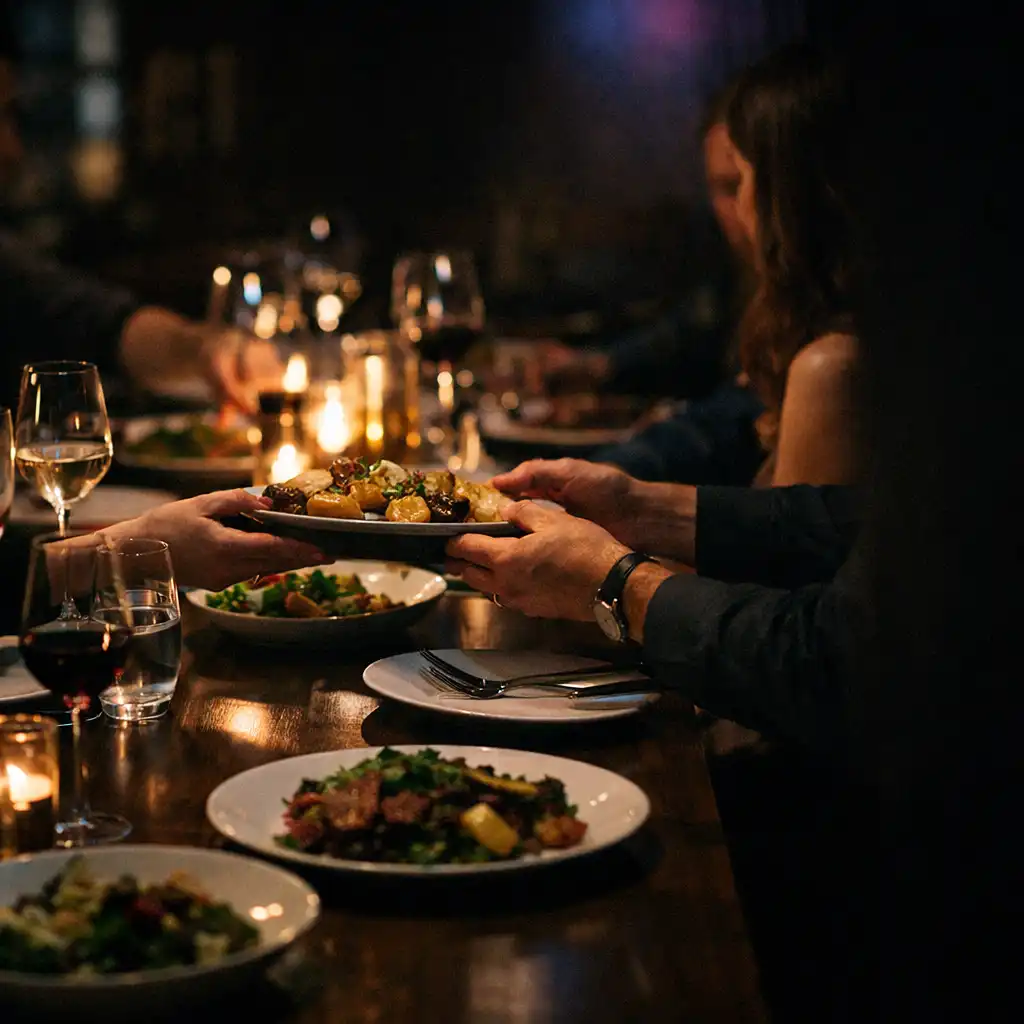
Late service at the shared table.
A longer transmission
A night can unfold, not rush.
Dinner first.
The strongest private occasions often have a clear rhythm: arrive, settle into dinner, let conversation open out, then decide whether the night wants another chapter. That is not a promised itinerary; it is a way of allowing the gathering to breathe. Dusk & Chance is a late-night restaurant destination, so the table can hold the opening stretch while the room slowly reveals its other registers.
AT THE TABLE
A shared table keeps the gathering grounded. Plated dishes, glass reflections and easy conversation give guests a common place to meet, whether the occasion begins with old friends or people getting to know one another. The point is not to over-programme the room. It is to leave enough space for food and company to carry the evening.
House note
Shared room, clear expectations.
Private dining works best when every guest can settle into the room comfortably, with conversation and dining given space to lead.
01 / ROOM
Read the room
Treat the card lounge and dedicated card room as places shared with care. Follow venue guidance, keep the mood considerate and respect the people around you. This is not a punitive rulebook; it is a simple hospitality principle. The setting works best when a private group stays attentive to the room it has entered and lets everyone enjoy its atmosphere.
02 / IN PERSON
Keep it in person
Poker tables and hosted in-person sessions belong to the physical venue, so interest in them should be raised as part of an in-person gathering conversation. Dusk & Chance’s offline poker experience is rooted in the room, the people in it and venue-led guidance. It is not something to plan away from the venue or treat as separate from the shared hospitality of the night.
The after-dark atmosphere is strongest when dinner, the lounge and any card-room moment are allowed to feel considered rather than over-programmed.
Late service
Food, light and the pace of the table.
Private dining begins with the table: the glow of late service, the clink of glassware and food intended to be shared in good company. At Dusk & Chance, the restaurant atmosphere gives a gathering texture before anyone needs to decide what happens next. The appeal is in the accumulated details—warm plates, deep colour, conversation carried across linen and reflective surfaces—not in a stock function-room formula.
A room built for lingering.
Rather than asking visitors to select a package, it is more useful to describe the gathering and let the conversation start from the kind of evening you want to create. That keeps the enquiry-led approach open and honest, without assuming a preset menu format or a fixed sequence. PRIVATE DINING / RESTAURANT MOOD / AFTER DARK
Private dining FAQ
Questions before you reach out.
A few focused answers for organisers thinking through dinner, the card spaces and the next conversation.
You can enquire about a dinner with interest in the card lounge or dedicated card room. The venue conversation is the place to work out what suits the occasion and the shared setting. Poker tables and hosted in-person sessions are part of Dusk & Chance at the physical venue only, so they are best discussed as part of an in-person evening rather than assumed within every private dinner.
Begin with the occasion and the feeling you hope the night will carry. It also helps to share a preferred date, broad group details, any early dining thoughts and, where relevant, interest in the card lounge or card room. None of these needs to read like a fixed brief; they are useful signals that give Dusk & Chance a clearer sense of the gathering you want to discuss.
Physical venue only
No. Poker tables and hosted in-person sessions are part of the physical Dusk & Chance venue experience. They belong to the card-room setting and the shared room around them, so private dining conversations should stay focused on an occasion taking place in person at the venue.
Plan for an after-dark restaurant occasion led by dinner, company and a considerate shared-room rhythm. You do not need to arrive with every detail resolved. Start with the people, the purpose and the desired mood, then use the enquiry conversation to explore how the restaurant setting and any relevant card-space interest might sit together. When ready, move to the enquiry invitation below.
Private dining enquiry
Make the night sound like yours.
Bring the occasion, a preferred date and any interest in the card lounge or physical card-room experience to a conversation with Dusk & Chance. Start from dinner and the kind of room you want to share; the venue can then understand the direction you have in mind. Poker tables and hosted in-person sessions remain part of the physical venue experience.
We use essential cookies to support this site. You can accept or reject optional cookies. Read our Cookie Policy.
Visitor check
Are you 18 or over?
Dusk & Chance hosts late-night dining and in-person card-room evenings for visitors aged 18 and over. Please confirm that you meet this age requirement.